Traders Strike: Govt Faces Pushback Over Tax Measures
Staff Report
Islamabad: A high-level meeting between PM’s Special Assistant Haroon Akhtar and leading trade associations reveals growing tensions over the shift from Fixed to Normal Tax Regime, as traders demand predictability and relief.
Govt and Traders into Battle Over Taxes
The rift between Pakistan’s business community and the federal government deepened this week as key export associations called for the reinstatement of the Final Tax Regime, warning that recent tax changes are stifling industrial growth.
Trade Bodies Divided Over Nationwide Strike
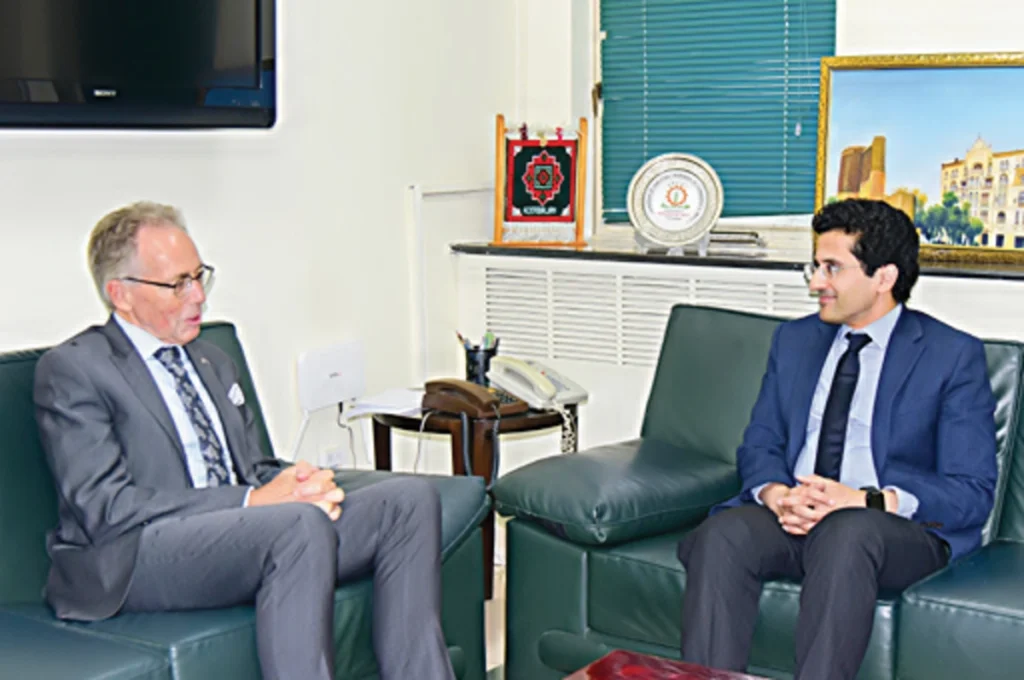
In a high-stakes meeting held in Islamabad, Special Assistant to the Prime Minister (SAPM) on Industries and Production Haroon Akhtar Khan met with representatives from the Sialkot Chamber of Commerce and Industry, Pakistan Readymade Garments Manufacturers & Exporters Association (PRGMEA), and Pakistan Hosiery Manufacturers Association (PHMA) to address rising discontent among exporters.
Shift to Normal Tax Regime Sparks Anger
Business leaders strongly objected to the Finance Act 2024, which effectively ended the decades-old Fixed Tax Regime and placed exporters under the broader Normal Tax Regime (NTR). The move has been criticized as burdensome, unpredictable, and prone to bureaucratic delays.
“The Fixed Tax Regime ensured simplicity, transparency, and eliminated corruption,” a representative from the Sialkot Chamber stated. “We demand its restoration to protect the export sector from further disruption.”
Govt Promises Policy Stability
In response, Haroon Akhtar Khan reassured participants that the government is “fully cognizant of the difficulties being faced by exporters” and committed to taking corrective measures.
He emphasized that Prime Minister Shehbaz Sharif has directed federal ministries to address trader concerns urgently. “We will pursue policies that encourage investment and remove obstacles to industrial growth,” Khan noted.
Focus on Industrial Policy and SME Definition
One of the key announcements during the meeting was the upcoming Industrial Policy, which the SAPM described as “forward-looking” and aimed at solving deep-rooted issues within the manufacturing sector.
He disclosed that the new policy would include a uniform and comprehensive definition for Small and Medium Enterprises (SMEs)—a long-standing demand of business associations that has implications for taxation, credit access, and government incentives.
Traders Strike Gains Momentum
The meeting took place just days after various chambers, including the Karachi Chamber of Commerce and Industry (KCCI) and Lahore Chamber of Commerce and Industry (LCCI), led a nationwide traders strike on July 19, 2025, in protest against the Federal Board of Revenue’s enhanced powers and tax policies. While the Federation of Pakistan Chambers of Commerce and Industry (FPCCI) withdrew from the strike following talks with the government, divisions within the business community remain stark.
The strike caused a partial shutdown of wholesale markets and commercial hubs across major cities, highlighting the mounting pressure on the government to revisit its taxation strategy.
Call for Predictable Business Climate
Khan concluded the meeting by stating that a predictable and stable policy framework is critical to long-term industrial development. He reiterated that all stakeholder concerns would be incorporated into the forthcoming Industrial Policy to rebuild trust between the government and the business community.