Port Qasim to Add 30,000-Ton Storage for Cement Exports
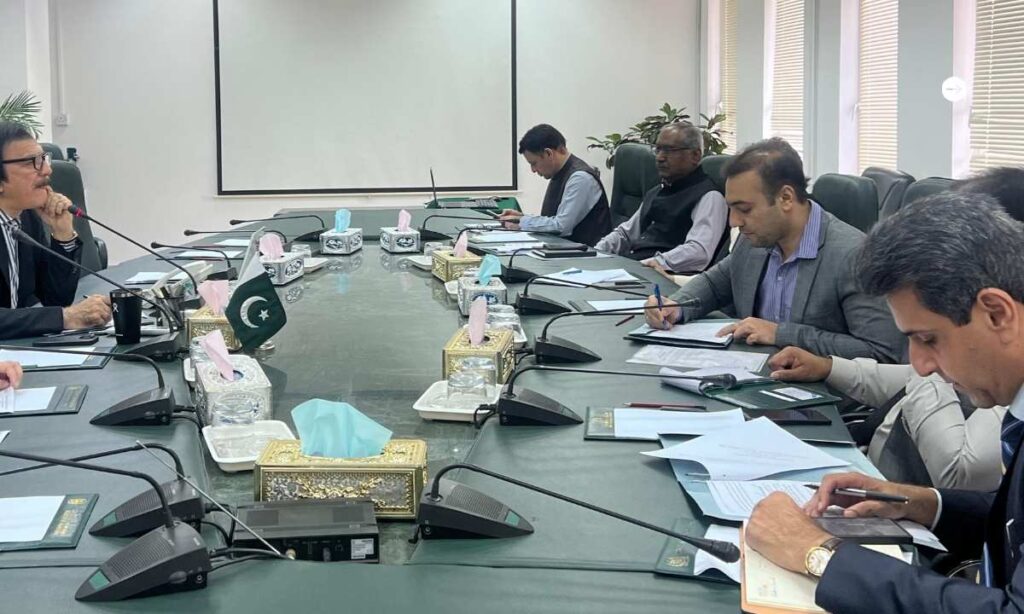
Port Qasim Authority will set up new storage capacity and upgrade existing facilities as Pakistan seeks to boost cement and clinker exports.
Port Qasim Authority (PQA) has announced plans to add 30,000 metric tons of new storage capacity while committing to repair its existing facilities by December 2025, as part of a broader government initiative to enhance cement and clinker exports. The decision was shared during a high-level meeting of the Task Force on Cement and Clinker Exports held in Islamabad on Thursday.
The meeting, chaired by Special Assistant to the Prime Minister Haroon Akhtar Khan, brought together senior officials including Prime Minister’s Coordinator Rana Ehsan Afzal, businessman Arif Habib, and representatives of Port Qasim Authority, Karachi Port Trust (KPT), State Bank of Pakistan, Board of Investment, Gwadar Port Authority, and the Ministry of Maritime Affairs.Pakistan Cement Sales up in Nov
Task Force members briefed participants on progress made to expand Pakistan’s export capacity and the infrastructure required to support the growing cement trade. Mr. Khan underlined the urgency of accelerating work on key projects, noting that two additional multi-purpose berths at Port Qasim are expected to be completed soon. He directed the PQA to provide a clear timeline for their commissioning.
The PQA chairman confirmed that a proposal for 30,000 tons of additional storage has already been submitted to the Authority’s board and assured that the existing storage facilities, which are critical for handling bulk shipments, will undergo full repairs by the end of 2025. He emphasized that these upgrades will support exporters in meeting international demand more efficiently.
Meanwhile, the Karachi Port Trust chairman informed the meeting that construction of berths numbered 10 to 17 at KPT is scheduled for completion by April 2026. These berths are expected to play a pivotal role in easing congestion and expanding cargo handling capacity at one of the country’s busiest maritime hubs.
In a move to support exporters in securing overseas orders, Mr. Khan instructed the State Bank of Pakistan to coordinate with Pakistan’s Ambassador in Dhaka to obtain an updated list of Bangladeshi cement importers. This database, he explained, will enable Pakistani banks with operations in Bangladesh to streamline Letters of Credit, thereby making Pakistani cement more competitive in South Asian markets.
To further strengthen logistical efficiency, Mr. Khan constituted a sub-working group that includes representatives from the Ministry of Railways, Ministry of Maritime Affairs, KPT, and industrialist Arif Habib. The group has been tasked with identifying land near the Karachi Northern Bypass for the establishment of truck marshalling yards. According to the government, such facilities will cut down both time and cost of transporting cement from production sites to ports, a long-standing challenge for exporters.
The government’s renewed focus on infrastructure development comes at a time when Pakistan’s cement sector is facing mounting competition from regional players. Countries like India and Vietnam have aggressively expanded their cement exports in recent years, often underpinned by efficient port infrastructure and lower logistics costs. By comparison, Pakistan’s exporters have long complained of high transportation expenses and inadequate storage capacity at ports, which erode their price competitiveness in global markets.
Pakistan exported nearly 5 million tons of cement and clinker in the fiscal year 2022–23, with key destinations including Bangladesh, Sri Lanka, the Middle East, and parts of Africa. However, export earnings have been inconsistent due to fluctuating freight costs and regulatory hurdles. Industry analysts argue that unless port infrastructure is significantly upgraded, Pakistan risks losing further market share to regional rivals.
In his remarks, Mr. Khan reassured industry stakeholders that exporters will be provided maximum facilitation under Prime Minister Shehbaz Sharif’s directive to enhance the country’s global competitiveness. He emphasized that the government’s commitment extends beyond physical infrastructure to financial and regulatory measures aimed at easing exporters’ operational challenges.
The Task Force, which has been convened multiple times over the past year, has already laid out plans to streamline documentation, expand rail connectivity to ports, and strengthen engagement with target export markets. Officials at Thursday’s meeting reiterated that the government sees cement and clinker exports not only as a source of foreign exchange but also as a means of sustaining growth in Pakistan’s industrial sector.
With Port Qasim’s additional 30,000-ton storage capacity, upgraded berths at both PQA and KPT, and new truck marshalling yards in Karachi, policymakers hope to create a more efficient export ecosystem by 2026. Industry stakeholders argue that if these timelines are met, Pakistan will be better positioned to compete in global cement markets and take advantage of rising construction demand across Asia and Africa.
The meeting closed with a renewed commitment from government and industry representatives to ensure that Pakistan’s cement exports remain a priority in national trade policy. The PQA chairman reiterated that the Authority’s expansion plans will align with exporters’ needs, ensuring that infrastructure bottlenecks do not hinder Pakistan’s ability to seize emerging market opportunities.