Oil Prices Hiked up to Rs 11.37 per Liter
Staff Report
ISLAMABAD: The government on Tuesday hiked the price of diesel up to Rs 11.37 per liter for the second half of July 2025.
The government had also increased the prices of petroleum products effective on July 1. This latest adjustment reflects persistent volatility in global oil markets. It also shows the government’s fiscal constraints in meeting its ambitious revenue targets as it is already charging highest rate of petroleum levy on petroleum products to collect revenue.
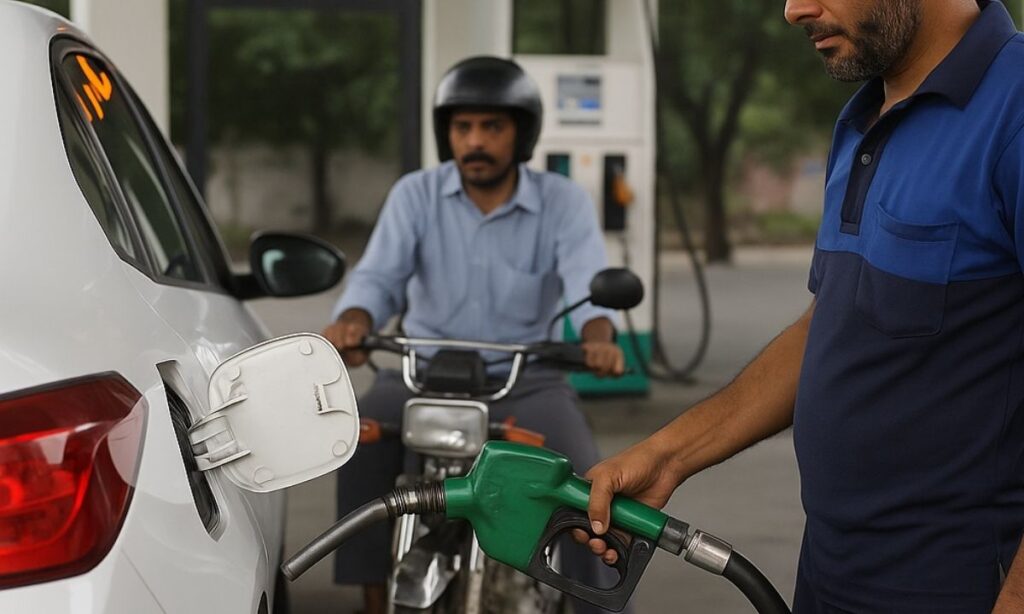
According to a notification issued by the Finance Division, the government has raised the price of petrol by Rs5.36 per litre, bringing it to Rs272.15 compared to old prices of Rs 266.79 per liter.Petrol Price Down by Rs 15.39 per liter
It also increased the price of High-Speed Diesel (HSD) by Rs11.37 per litre to Rs284.35 against earlier price of Rs 272.98 per liter, effective from July 16, 2025.
The government said that it had taken a decision following the recommendations of the Oil and Gas Regulatory Authority (OGRA) and in consultation with relevant ministries.
The Government has decided to revise the prices of petroleum products for the fortnight starting July 16, based on the recommendations of OGRA & the relevant ministries,” the Finance Division said in its official release.
The Ogra had recommended the government to increase the prices of petroleum products based on Rs 78.02 per litre petroleum levy (PL) on petrol and Rs 77.01 per litre PL on HSD.
It had also assumed Inland Freight Equalization Margin (IFEM) at Rs 8.89 per litre on petrol and Rs 6.04 per litre on HSD. Exchange rate adjustment on petrol was calculated at Rs 3 per litre on petrol and Rs 2 per litre on HSD.
Diesel is widely used in agriculture and freight transport, and any price increase directly impacts the cost of goods and services. Petrol, meanwhile, fuels motorcycles and cars, and serves as an alternative to CNG, especially in Punjab, where CNG stations rely on imported LNG.
The fresh hike is expected to further widen the gap between stagnant household incomes and the rising cost of living. Analysts have warned that without fiscal space or targeted subsidies, the brunt of global oil volatility will continue to be passed on to end consumers.
The government had also space to rescue the consumers from the current hike in oil prices by slashing rate of petroleum levy on petroleum products.
But it did not compromise on revenue collection and passed on full impact of increase in oil prices in the global market to the consumers.