Pakistan T20 squad begins Dubai camp for Asia Cup
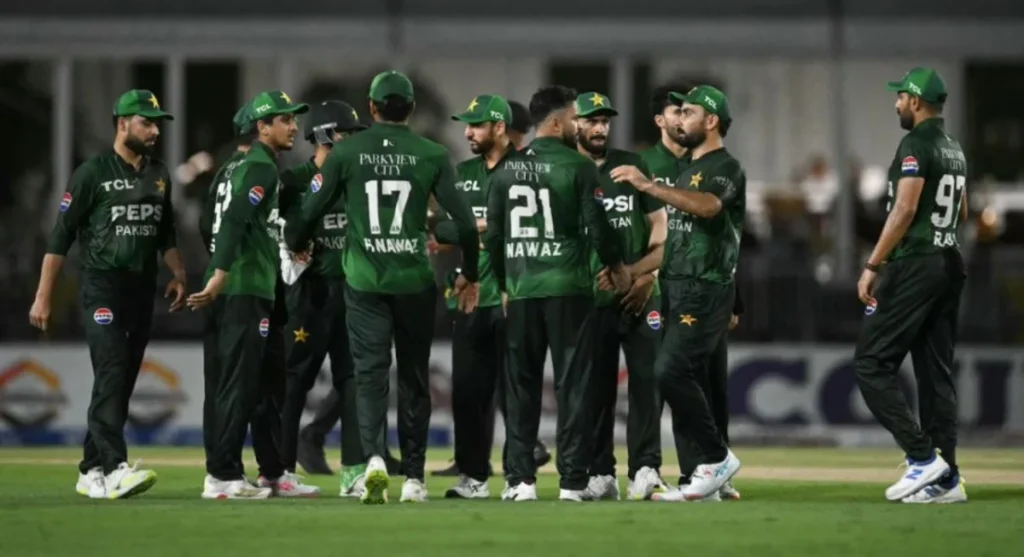
Pakistan’s men’s T20 cricket team arrived in Dubai on Wednesday to begin preparations for the Asia Cup and a tri-nation series against Afghanistan and the UAE.
Pakistan’s men’s T20 cricket squad landed in Dubai on Wednesday in four staggered groups, beginning a crucial preparation phase ahead of back-to-back assignments in the Gulf. The team will open its tri-nation series against Afghanistan and the UAE on August 29 before turning to the Asia Cup on September 9, both staged in Dubai.
The Pakistan Cricket Board (PCB) confirmed that players will train at the ICC Cricket Academy between August 21 and 27, with a full schedule of practice sessions and a T20 warm-up game at the Dubai International Stadium. According to state broadcaster PTV, the camp was designed to provide “ideal conditions” before the tournaments, with all training confined to Dubai facilities.
This build-up comes amid major changes to Pakistan’s T20 setup. Former captain Babar Azam and wicketkeeper Mohammad Rizwan, long the batting backbone of the side, were left out of the squad named on Sunday. Both have been absent from the format since December, with head coach Mike Hesson stressing that Pakistan wanted to reward emerging performers. “We want to give opportunities to players who have shown form and potential,” he said last week.
Pakistan New Zealand T20 Series Schedule, Squad Revealed
Pakistan’s form under Hesson has been mixed since he took charge in May. The team swept Ireland 3-0 at home, suffered a 2-1 defeat in Bangladesh, and beat the West Indies 2-1 in the United States. The inconsistency has highlighted concerns about batting depth and stability in the shortest format, sharpening the spotlight on this squad overhaul.
Leadership has shifted to Salman Agha, the 30-year-old all-rounder handed the captaincy for the first time. Known for his adaptability in middle-order roles, Agha leads a 17-man squad that blends experience with fresh inclusions. The pace attack features Shaheen Shah Afridi, Haris Rauf and Hasan Ali, alongside returning quicks Mohammad Wasim and Salman Mirza. Spin options include Sufiyan Muqeem and Abrar Ahmed, underscoring a focus on variety.
On the batting front, Fakhar Zaman and Saim Ayub are tasked with anchoring the top order, while Khushdil Shah, Mohammad Haris and Sahibzada Farhan offer flexibility in the middle. Hasan Nawaz, among the younger inclusions, symbolizes Pakistan’s attempt to expand its pool of power-hitters in advance of the 2026 T20 World Cup. All-round depth comes from Faheem Ashraf, Hussain Talat and Mohammad Nawaz, providing balance to the squad.
The Asia Cup carries weight beyond mere preparation. Traditionally seen as a proving ground for South Asian teams before global tournaments, the competition pits Pakistan against long-time rivals in a high-profile environment. Pakistan last reached the final in 2022, losing to Sri Lanka, and will now be judged on whether a new batting order can withstand pressure without Babar and Rizwan, two of the world’s leading T20 scorers in the last five years. Some analysts have described their exclusion as a bold experiment that could define Hesson’s tenure.
The tri-series with Afghanistan and the UAE, though lower-profile, presents immediate challenges. Afghanistan, with their spin-heavy attack and aggressive batting, have consistently troubled Pakistan in T20 contests. Playing in Gulf conditions, familiar to both sides, will test Pakistan’s revamped approach against unpredictable opposition.
For now, acclimatisation is central. The ICC Cricket Academy, where Pakistan has previously trained before World Cups, offers outdoor and indoor pitches, specialist support, and conditioning programs. The PCB has emphasized that the structured camp will prepare players physically and tactically for the packed schedule.
Pakistan’s 17-member squad includes Salman Agha (captain), Saim Ayub, Fakhar Zaman, Sahibzada Farhan, Hasan Nawaz, Salman Mirza, Mohammad Haris, Mohammad Nawaz, Shaheen Shah Afridi, Haris Rauf, Hasan Ali, Hussain Talat, Sufiyan Muqeem, Abrar Ahmed, Khushdil Shah, Faheem Ashraf and Mohammad Wasim.
The coming weeks will be pivotal in shaping Pakistan’s T20 future. The absence of household names offers opportunities for new leaders to emerge, but also increases scrutiny. Whether this gamble produces stability or exposes weaknesses will determine how Pakistan enters the global T20 circuit next year. As the squad begins its Dubai camp, Pakistan’s ambitions in the format enter a critical phase, with the Asia Cup serving as both a test and a signal of direction.