Pakistan restores electricity for 1.4m flood-hit consumers
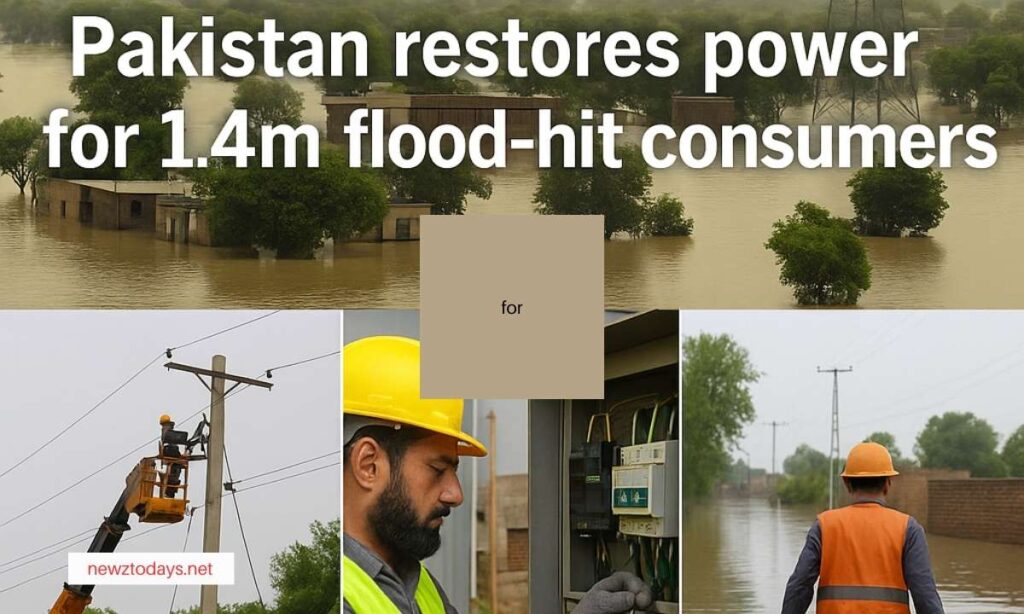
Electricity has been restored to 1.4 million out of 1.65 million flood-affected consumers across Pakistan, while work on remaining connections continues, according to the Power Division.
Pakistan’s Ministry of Energy reported on September 8 that major progress had been made in restoring power supply to areas hit by floods in Punjab, Khyber Pakhtunkhwa and tribal districts, though more than 255,000 consumers remain without electricity. The Power Division said restoration timelines vary by region, depending on floodwater levels and access conditions.
In Faisalabad Electric Supply Company’s (FESCO) areas, including Toba Tek Singh, Faisalabad, Chiniot, Jhang, Sargodha, Mianwali, and Dera Ismail Khan, 27 grids and 80 feeders were initially affected. Of these, 17 feeders have been fully restored while 59 are functioning on a temporary basis. Out of nearly 202,000 affected consumers, around 90,000 now have power, while the remaining 111,888 are expected to be reconnected by September 10 once floodwaters recede.
Gujranwala Electric Power Company (GEPCO) reported that 11 grids and 103 feeders were damaged during the floods. Restoration has been completed on 89 feeders while 14 are partially active. Out of 736,000 affected consumers in GEPCO’s region, power has been restored to more than 722,000. Restoration work for the remaining 13,585 is expected to conclude once water levels drop further.Karachi on Flood Alert as Storms Loom
In Lahore Electric Supply Company’s (LESCO) region, which covers Lahore, Okara, Sheikhupura, Kasur, and Nankana, 67 feeders were affected. Restoration has been completed on 57 feeders while 10 remain partially active. Out of nearly 74,000 consumers impacted, over 64,000 now have electricity, with the remaining 9,341 expected to be reconnected between September 9 and 10. Officials confirmed that power restoration in Sheikhupura has already been completed.
Multan Electric Power Company (MEPCO) reported that 153 feeders were damaged in its jurisdiction. Four have been fully restored while 149 are operating temporarily. A total of 129,244 consumers were affected in MEPCO’s areas, and officials said full restoration work will begin immediately once water levels allow.
In Peshawar Electric Supply Company’s (PESCO) jurisdiction, covering Swat, Buner, Shangla, Swabi, and Dera Ismail Khan, 12 grids and 91 feeders were impacted. Out of these, 86 feeders have been fully restored while 5 remain partially restored. PESCO said out of 463,375 affected consumers, electricity has been restored to 461,049. The remaining 2,326 are expected to be reconnected between September 11 and 12. Restoration in Swat, Swabi, and D.I. Khan has already been fully completed.
In Tribal Electric Supply Company’s (TESCO) region, North Waziristan and Khyber were hit with outages affecting 18 feeders. Power has been fully restored to 13 feeders and partially restored to 5. Out of 31,774 affected consumers, electricity has been restored to 27,378. The remaining 4,396 are expected to be reconnected by the evening of September 15.
Meanwhile, Hazara Electric Supply Company (HAZECO) reported that all three affected feeders in Mansehra have been fully restored.
The Power Division stated that across Pakistan, 50 grids and 515 feeders were affected by the floods. Out of these, 269 feeders have been fully restored while 242 are temporarily functioning. In total, electricity has been restored to 1,404,486 out of 1,659,716 affected consumers nationwide.
Officials emphasized that restoring power for the remaining 255,230 consumers remains a top priority, but access to submerged areas continues to pose challenges. The division noted that power engineers and technical teams are on the ground, carrying out repairs in coordination with local administrations.
Pakistan has faced recurring power disruptions during floods in recent years, with electricity infrastructure often taking heavy damage due to submerged grids, damaged transmission lines, and safety risks in inundated areas. Similar situations were reported during the devastating floods of 2022, when more than 33 million people were affected and prolonged outages were reported across Sindh, Punjab, and Khyber Pakhtunkhwa.
Experts have repeatedly warned that climate change is intensifying extreme weather events in South Asia, leaving energy infrastructure particularly vulnerable. While Pakistan’s power sector has made strides in grid expansion and rural electrification, disaster preparedness and resilient infrastructure remain pressing issues.
The Power Division has urged citizens in flood-affected areas to exercise caution when water levels remain high, stressing that premature reconnection of electricity can create safety hazards. Authorities are continuing damage assessments while working on phased restoration in inaccessible zones.
As of September 8, government officials expressed confidence that most pending cases of disconnection will be resolved within a week, provided that water recedes as expected. The Ministry of Energy reiterated that full power restoration for flood-hit consumers remains a national priority.