Pakistan Rejects UAE Demand to Hand Over Karachi, Lahore Airports
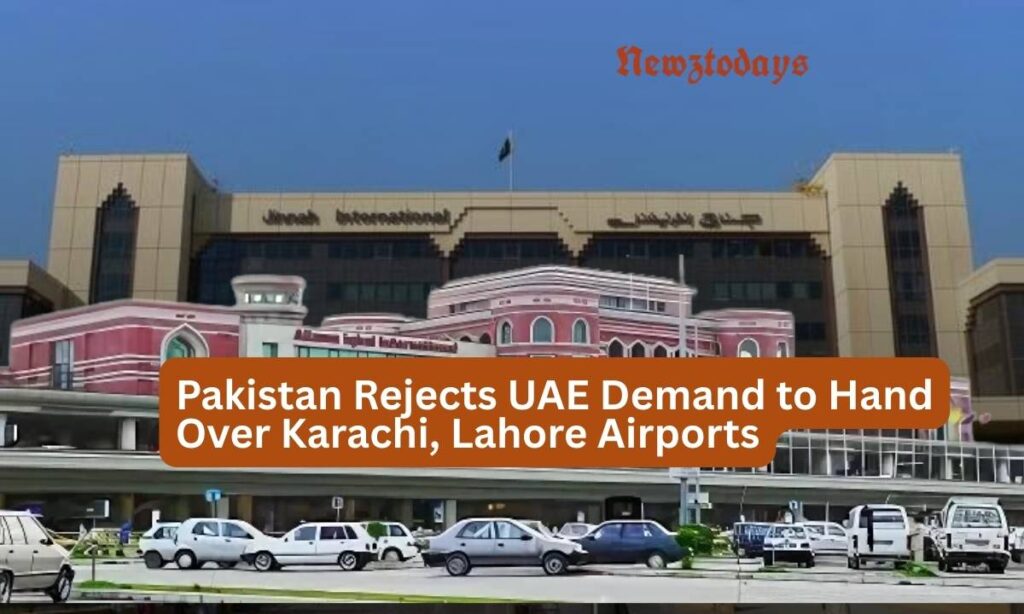
Government limits framework agreement to Islamabad Airport after UAE sought control of three major airports.
Pakistan has rejected the United Arab Emirates’ (UAE) request to include Karachi and Lahore airports in a government-to-government framework agreement, deciding instead to restrict the deal to Islamabad International Airport. The move came after the Cabinet Committee on Inter-Governmental Commercial Transactions (CCoIGCT) reviewed the draft agreement and removed the country’s two busiest airports from its scope. UAE Warns Annexation Threatens Abraham Accords
Officials said the UAE had formally expressed interest, through its embassy, in managing and operating Islamabad Airport. The Special Investment Facilitation Council (SIFC) advised that a framework agreement be drafted for approval. However, when the draft was submitted to the CCoIGCT in July 2025, the UAE added demands to expand the arrangement to cover Karachi and Lahore airports as well.
During deliberations, the committee observed that the original scope was limited to Islamabad Airport and that expanding it to other airports would require deeper review. The cabinet body decided to keep the agreement as an umbrella framework for aviation sector cooperation but restricted its operational focus to Islamabad. The names of Karachi and Lahore airports were ordered to be deleted from the draft.
The committee also stressed the importance of clarifying the role of the UAE’s nominated entity. Abu Dhabi Development Holding Company (ADQ), a sovereign wealth fund wholly owned by the UAE government, had been designated earlier as the counterparty. But the committee noted ambiguity in the latest draft and directed negotiators to ensure that the entity is explicitly identified in the agreement.
Further, the committee instructed that the Secretary Privatization Division be included in the negotiation process and that only senior officers not below grade BS-21 be assigned to the talks. The framework is also to be shared with the Special Assistant to the Prime Minister on Coordination in the Deputy Prime Minister’s office for final review before any signing.
The Inter-Governmental Commercial Transactions Act, 2022, provides the legal mechanism for such agreements to attract foreign investment. Under the draft, the framework agreement’s validity period has already been reduced to three months instead of one year at Pakistan’s insistence, but discussions on the nominated entity and airport scope remain unresolved.
Officials confirmed that drafts had been exchanged informally with the UAE, with the latter also proposing discussions on optimizing links between Abu Dhabi and Pakistani airports. These additional demands, which were not part of earlier negotiations, were deemed to require further examination.
The CCoIGCT underscored that Pakistan’s improving economic outlook should be taken into account in future evaluations of the agreement. It also emphasized the need to safeguard national interest in key infrastructure assets while exploring avenues for foreign investment.
The decision to exclude Karachi and Lahore airports reflects the government’s cautious approach to handing over management of its busiest aviation hubs. Islamabad International Airport, inaugurated in 2018, has been considered more viable for foreign operational partnerships, while Karachi and Lahore airports remain critical gateways for domestic and international traffic.
Talks with the UAE remain ongoing, with Pakistan signaling readiness to continue engagement but under stricter conditions. The framework agreement, once finalized, would allow the UAE to manage Islamabad Airport through ADQ, pending further clarity on terms. For now, however, the government has drawn a firm line on protecting Karachi and Lahore from foreign management. Read More Stories on NewzToday