Pakistan, ADB discuss energy reforms and clean power
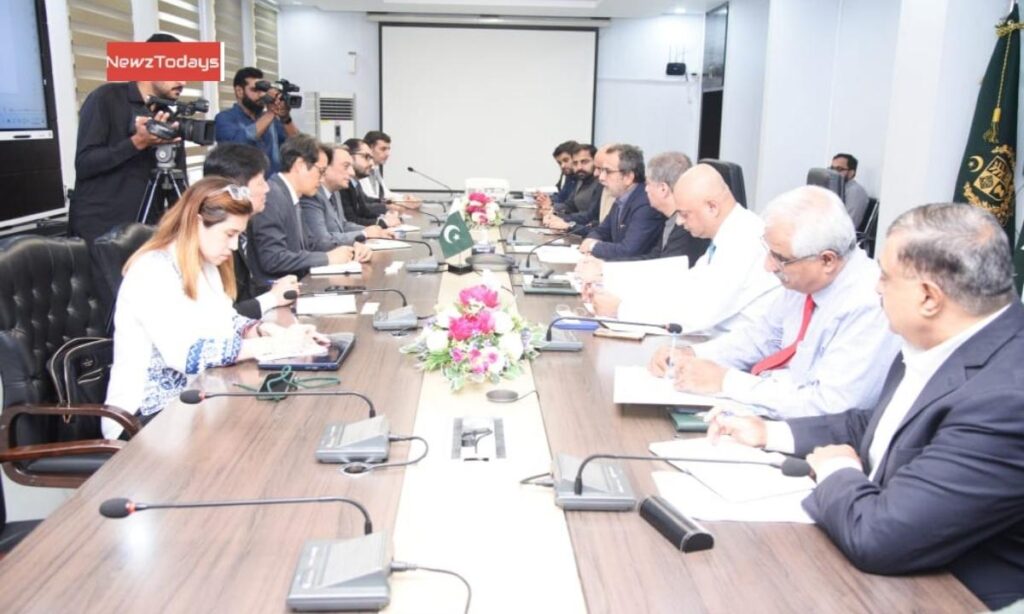
Minister Awais Leghari says three DISCOs to be privatized in first phase, seeks green financing and global support for clean energy transition
ISLAMABAD: Federal Minister for Power Sardar Awais Ahmad Khan Leghari on Thursday met with a delegation of the Asian Development Bank (ADB) led by Mr. Joonho Hwang, Director Energy, to discuss Pakistan’s ongoing energy sector reforms, privatization of distribution companies (DISCOs), and future cooperation under the public-private partnership (PPP) model.
Leghari acknowledged ADB’s continued assistance in integrated energy planning and PPP promotion, noting that in the first phase the government will move ahead with privatization of three state-run DISCOs. He said both investment and technical support from international partners would be welcomed to strengthen management and efficiency in power distribution.CCoE approves IGCEP with major focus on clean energy
The minister emphasized that the government has prioritized clean energy as part of its broader sustainability agenda. He highlighted that Pakistan recently introduced a new tariff for electric vehicles to encourage adoption of green technology and has shut down about 2,800 megawatts of fossil fuel-based power plants ahead of schedule. He said this step demonstrates Pakistan’s commitment to reducing emissions and called for global access to green financing and carbon credits to sustain progress.
ADB’s Joonho Hwang reaffirmed the bank’s support for Pakistan’s energy transition, announcing that $130 million has been approved for the country’s energy sector, with an initial $30 million immediately available. He said ADB valued Pakistan’s initiatives toward green financing and carbon market development, adding that the World Bank would also be engaged to review projects at the initial stage to maximize benefits for Pakistan.
Hwang assured that ADB will back Pakistan’s efforts to privatize DISCOs, establish a national carbon market, and modernize its transmission and distribution network. He also expressed commitment to advancing renewable energy development, noting that reforms in the power sector are essential for economic stability and regional competitiveness.
Leghari reiterated that transparency, sustainability, and technological modernization remain at the core of the government’s energy policies. He stressed that the ultimate goal is to ensure affordable and sustainable electricity supply to the public, which requires international partnerships and financial backing.
Pakistan has historically struggled with structural inefficiencies in its power sector, with high transmission losses, circular debt, and reliance on expensive imported fuels. Previous governments have attempted partial privatization and restructuring, but progress has been uneven. Analysts note that successful privatization of DISCOs under the PPP framework could mark a turning point by reducing financial leakages and improving service delivery to millions of consumers.
ADB has been a long-term partner in Pakistan’s energy development, funding projects in renewable energy, grid expansion, and technical reforms. Its latest commitment underscores global interest in Pakistan’s clean energy transition, particularly as the country grapples with rising demand, climate change impacts, and financing challenges.
Leghari said Pakistan views ADB’s role as critical in shaping future reforms and scaling renewable energy investments. “Our priority is to secure a sustainable power sector that supports economic growth and eases the burden on citizens,” he said, adding that enhanced cooperation on grid modernization and carbon credit access would be pivotal.
The meeting concluded with both sides reaffirming a joint roadmap for energy sector reform, including greater reliance on renewable energy, phased privatization of distribution, and enhanced access to international climate finance. The government expects that these measures, supported by institutions like ADB and the World Bank, will not only address immediate fiscal and technical challenges but also set Pakistan on a path toward long-term energy sustainability.