NEPRA seeks greater powers to act against overbilling Discos
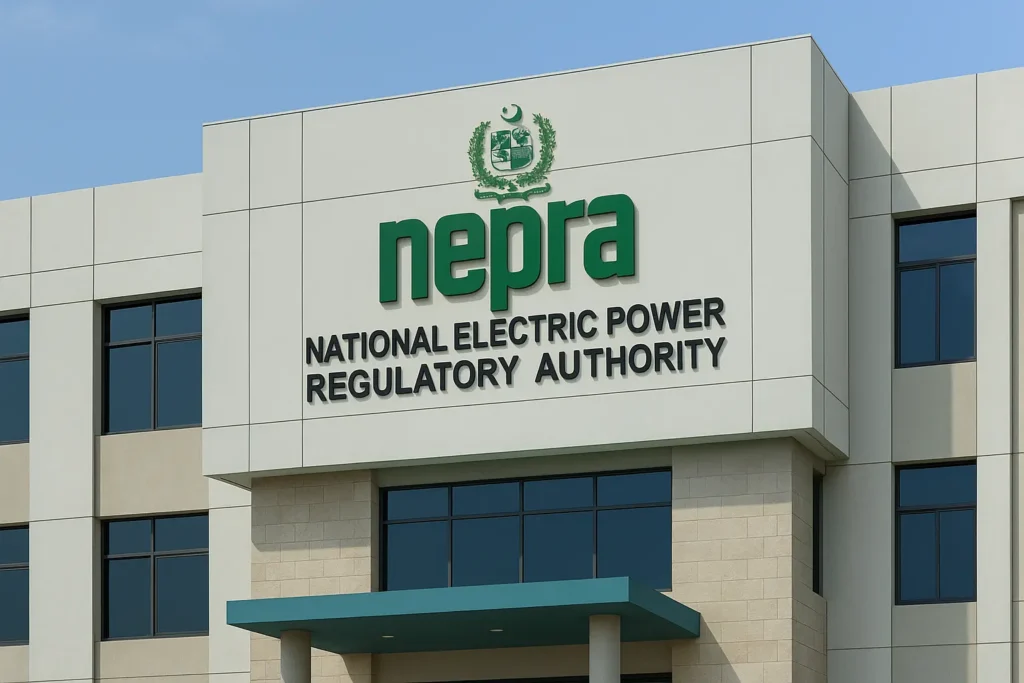
Regulator tells Parliament inflated bills hit 1.58m consumers in June 2024
The National Electric Power Regulatory Authority (NEPRA) has asked Parliament to grant it stronger enforcement powers against electricity distribution companies (Discos) accused of unjustified load shedding and inflated billing, saying its current authority is limited to imposing fines.
NEPRA Member (Technical) Rafique Ahmad Shaikh, appearing before the National Assembly Standing Committee on Cabinet Division on Thursday, said consumers needed protection from what he described as the “cruelty” of Discos, particularly those carrying out outages based on Aggregate Technical and Commercial (AT&C) losses. He urged the Committee to recommend legislative amendments empowering NEPRA to take direct punitive action against companies that violate regulations.
His appeal followed sharp criticism from Committee members who expressed frustration over NEPRA’s performance in ensuring reliable supply, preventing overbilling, and addressing shortages of replacement equipment. The briefing was chaired by Mian Ibrar Ahmed and attended by NEPRA Member (Law) Amina Ahmed, Member (Development) Maqsood Anwar Khan, and Chief Law Officer Mian Ibrahim.
KE Seeks Nepra’s Nod on Write Off Claims
In a detailed presentation, Ibrahim told lawmakers that millions of consumers across Pakistan had received inflated electricity bills in June 2024 due to violations of the standard 30/31-day billing cycle. He explained that early meter readings caused pro-rata billing adjustments, pushing many households into higher tariff categories, such as from protected to non-protected slabs or from lifeline to non-lifeline categories. Similarly, late readings that were not adjusted properly also led to inflated charges.
Ibrahim stressed that pro-rata adjustments are not permitted for early meter readings under NEPRA rules, and in cases of delayed readings due to force majeure, excess units should be carried forward to the following billing cycle to benefit consumers. He said the irregular billing affected 1.58 million consumers across multiple distribution companies, with a collective financial impact running into billions of rupees.
According to NEPRA’s breakdown, Multan Electric Power Company (MEPCO) accounted for the largest share, with Rs 961 million in overbilled charges affecting 434,856 consumers. Gujranwala Electric Power Company (GEPCO) overbilled Rs 892 million to 371,107 consumers, while Lahore Electric Supply Company (LESCO) charged Rs 488 million in excess to 178,516 customers. Other affected utilities included FESCO, HESCO, PESCO, QESCO, SEPCO, K-Electric, and IESCO. Ibrahim assured the Committee that all inflated bills were corrected and relief was extended to consumers after the discrepancies were identified.
Lawmakers, including Brig. (retd) Aslam Ghumman, Shahida Begum, and Nawabzada Mir Jamal Khan Raisani, voiced strong concern that NEPRA had failed to act as an effective consumer watchdog. They pressed the regulator on its enforcement record against load shedding, overbilling, and electricity theft, as well as its ability to address systemic weaknesses in the power sector.
The hearing also touched on long-standing structural issues. Rafique Shaikh told the Committee that NEPRA had already approved tariffs of three to four cents per kilowatt-hour for several renewable energy projects, but these projects were not cleared by the government and were subsequently reclassified. He argued that while capacity payments—guaranteed payments to power producers regardless of output—are standard practice globally, NEPRA had shifted some projects from “take-or-pay” to “take-and-pay” contracts, removing such payments in those cases.
On the issue of load shedding linked to AT&C losses, Shaikh said the practice was explicitly prohibited under NEPRA regulations. He alleged that when the regulator attempted to curb the practice, the Discos justified it by claiming instructions from the federal Power Division. Without legal backing to override such practices, NEPRA could only impose financial penalties. “At present, we are only empowered to impose fines,” Shaikh admitted, stressing the need for broader legal authority.
The Committee pledged to support measures to protect consumers, with members acknowledging that unchecked overbilling and forced outages had intensified public frustration with Pakistan’s fragile power sector. Chronic problems of circular debt, rising tariffs, and limited investment in distribution infrastructure have continued to undermine sector performance despite years of reforms.
NEPRA’s call for stronger powers comes at a time of mounting pressure on households and businesses struggling with high electricity costs. Parliamentary approval of enhanced authority for the regulator could reshape the balance between oversight and operational autonomy for distribution companies. However, past efforts to expand regulatory enforcement have often met resistance from both the government and power sector stakeholders, raising questions over whether substantive change will follow.
In closing remarks, Rafique Shaikh reiterated that empowering NEPRA would help restore public trust in the regulator’s role as a guardian of consumer rights. The Committee assured him of its support in pursuing legal amendments, but whether such proposals move forward in Parliament remains uncertain. For now, the regulator’s struggle to rein in overbilling and arbitrary outages continues to be a central flashpoint in Pakistan’s energy crisis.