Mansoor Ali Shah letter sparks rift over 26th Amendment
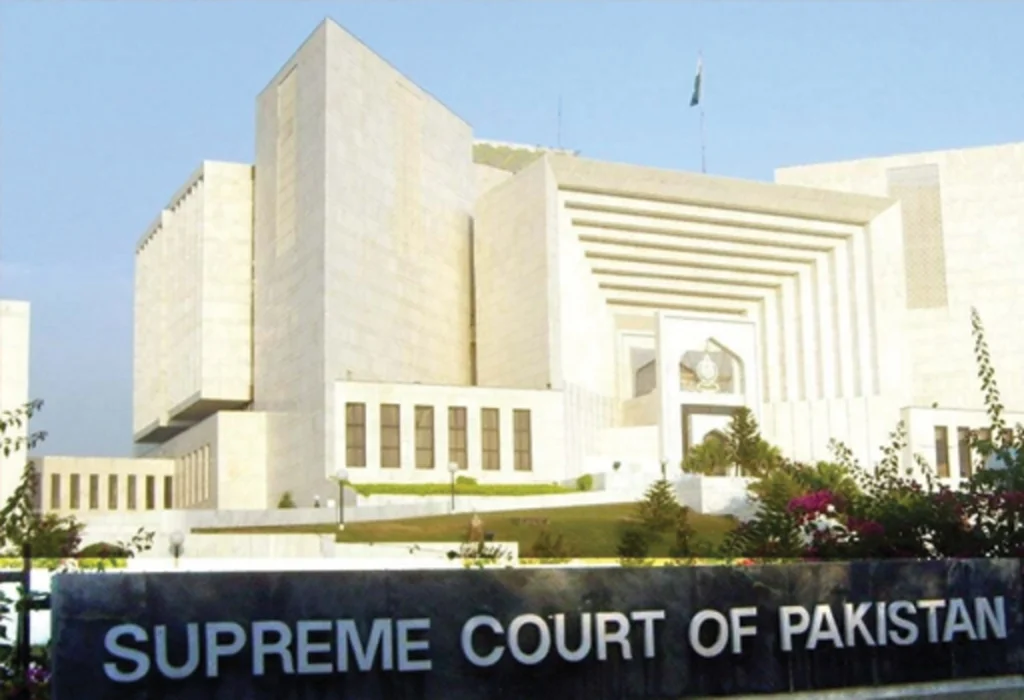
A letter by Supreme Court judges Mansoor Ali Shah and Munib Akhtar has accused Chief Justice Yahya Afridi of defying a binding decision on the 26th Constitutional Amendment case.
In a detailed note made public on Wednesday, Justice Mansoor Ali Shah and Justice Munib Akhtar charged that the chief justice failed to implement a majority decision of the Supreme Court’s Practice and Procedure Committee. The committee had on October 31, 2024, resolved to fix petitions challenging the 26th Amendment before a full court, but the order was never carried out.
The judges said they had reminded Afridi in writing on November 4, 2024, but still no compliance followed. Instead, the chief justice issued notes on October 31 and November 5 that were neither shared with them nor circulated, one of which was read out during a meeting of the Judicial Commission of Pakistan (JCP). They argued the JCP had “no jurisdiction” over the matter.
According to the judges, they pressed Afridi in October 2024 to convene a full court, citing a crisis of confidence in the judiciary. They argued that the very legitimacy of the Supreme Court and the chief justice’s office required transparent adjudication, but Afridi insisted the petitions could only be heard by new constitutional benches created under the 26th Amendment itself.
Supreme Court admits Imran Khan’s bail pleas in May 9 cases
Shah and Akhtar objected that referring challenges to benches formed under the disputed amendment undermined credibility. They further criticised Afridi for canvassing judges informally instead of convening a full meeting, calling it contrary to law. After a formal vote, the committee decided by majority to hear the petitions before a full court on November 4, but this never materialised.
Instead, Afridi moved the issue to the JCP, which approved a seven-member bench. The two judges said this was a deliberate attempt to override a binding majority. They stressed that the petitions remain pending and that a “golden opportunity” to resolve the issue through full court consensus “has been lost, perhaps irretrievably.”
The controversy is rooted in the 26th Constitutional Amendment, passed in 2023, which restructured judicial powers and enabled controversial measures such as civilian trials in military courts. Critics say it undermines independence by centralising authority in the chief justice’s office.
Legal voices have strongly reacted. Former Sindh High Court Bar Association president Salahuddin Ahmed said Afridi’s refusal to implement the majority view was “unlawful.” Advocate Rida Hosain called the CJP’s closed-door canvassing “frankly absurd,” warning that his delay damages public confidence. Advocate Mirza Moiz Baig said the episode tarnishes Afridi’s otherwise strong reputation, while Advocate Atira Ikram lamented that the judiciary has descended into divisions typical of politics.
Justice Mansoor Ali Shah and Justice Munib Akhtar concluded that their explanatory letter should be published on the Supreme Court’s website alongside the minutes to ensure the record is complete. They declared that “it was mandatory to constitute a full court on the 26th Amendment, and no one could override it.”
With petitions still pending, critics warn that the legitimacy of both the 26th Amendment and the judiciary itself hangs in balance. For Mansoor Ali Shah and others demanding full court adjudication, the case has become a defining test of the Supreme Court’s independence.