RLNG prices rise up to 2.6% for September 2025
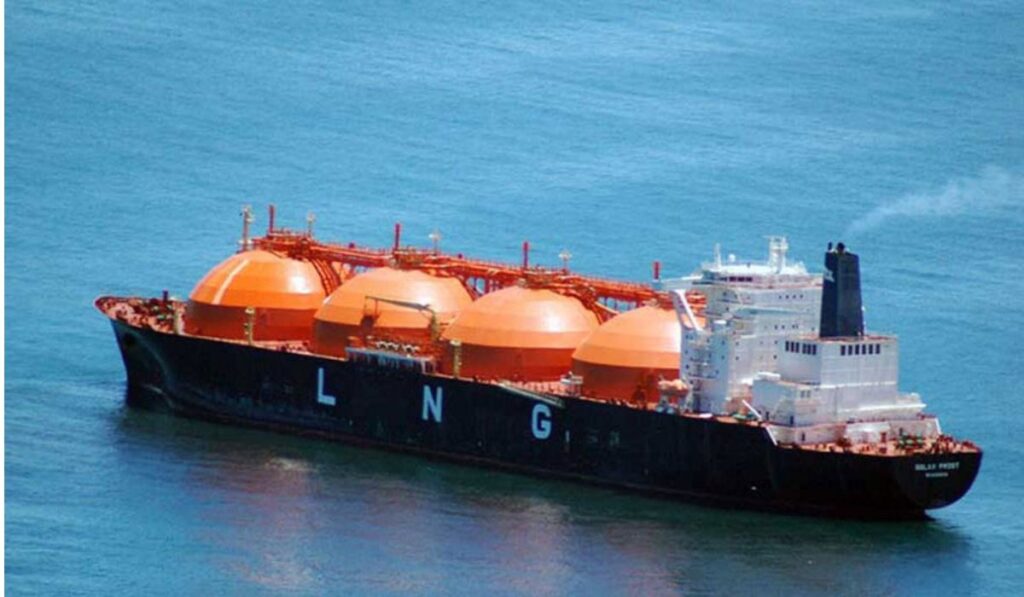
Islamabad: The Oil and Gas Regulatory Authority (OGRA) has announced an increase in the Regasified Liquefied Natural Gas (RLNG) prices for September 2025, with both Sui Northern Gas Pipelines Limited (SNGPL) and Sui Southern Gas Company Limited (SSGC) customers set to pay more compared to August. The adjustment, effective September 1, was attributed to a rise in the Delivered Ex-Ship (DES) import price.
For SNGPL consumers, the transmission price increased to $11.2365 per MMBtu, up from $10.9770 in August, marking a rise of $0.2595 or 2.36%. The distribution price climbed to $12.0127 per MMBtu from $11.7330, an increase of $0.2797 or 2.38%.

For SSGC, the impact was slightly higher in percentage terms. The transmission tariff rose to $9.8619 per MMBtu, up from $9.6097 in August, reflecting an increase of $0.2522 or 2.62%. Meanwhile, the distribution price went up to $11.0105 per MMBtu compared to $10.7285 previously, showing an increase of $0.2820 or 2.63%.Ogra Increases LNG Prices
The increase follows global energy market trends, as DES-linked import costs rose in the international market, directly impacting Pakistan’s LNG-based energy supply chain. RLNG is priced against global oil benchmarks, particularly Brent crude, making the country vulnerable to international price fluctuations and currency depreciation.
The hike in RLNG prices carries significant economic implications. Industries that depend heavily on RLNG—including power generation, fertilizer, and large-scale manufacturing—will face higher input costs. This in turn risks fueling inflation, adding to the burden already faced by households and businesses amid elevated food and energy expenses.
Regional disparities also remain evident in the new computation. SNGPL consumers, primarily in Punjab and Khyber Pakhtunkhwa, continue to pay higher RLNG prices than SSGC consumers in Sindh and Balochistan. This variation arises from differences in transmission losses and supply structures, and it has long been a point of contention between provinces.
OGRA clarified that the increase is modest and directly tied to the higher DES price for imported cargoes. However, with Pakistan’s reliance on RLNG imports growing due to depleting domestic gas reserves, experts warn that such monthly adjustments are likely to persist unless alternative energy sources or long-term supply contracts reduce exposure to volatile spot markets.
The September 2025 revision underscores the tightrope Pakistan walks between ensuring energy availability and managing affordability. With transmission and distribution prices now crossing $12 per MMBtu in some regions, the pressure on consumers and industries is expected to intensify in the months ahead.