Laptop manufacturing plant planned in Pakistan with Chinese firm
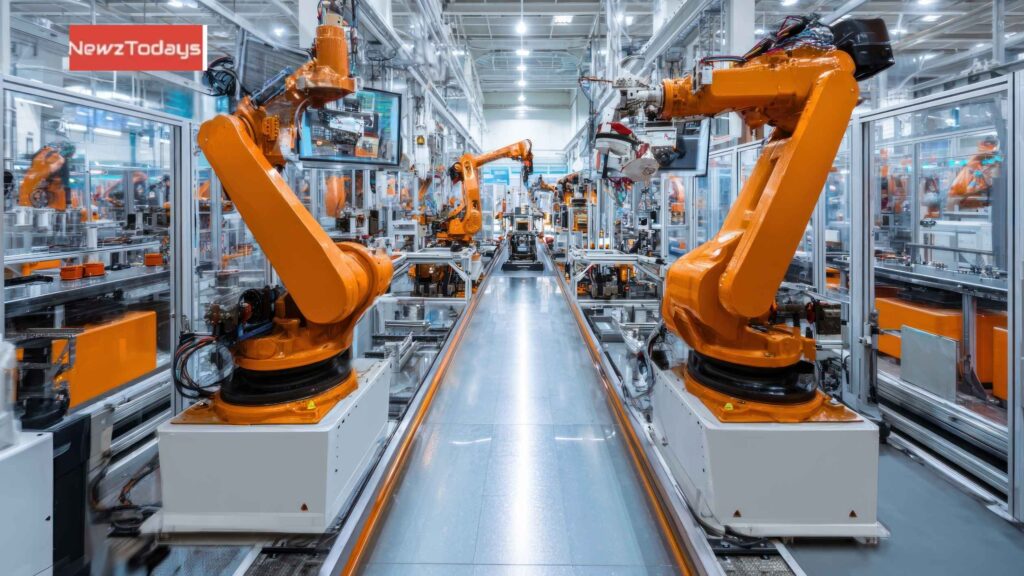
A Chinese laptop maker, HYF, has shown interest in establishing a laptop and tablet manufacturing plant in Pakistan, aligning with the government’s upcoming Mobile Device Policy.
The Government of Pakistan is preparing to launch a Mobile Device Policy that will extend beyond smartphones to cover laptops and tablets, a move intended to reduce the country’s reliance on imports and attract foreign investors. The policy gained momentum after Special Assistant to the Prime Minister (SAPM) Haroon Akhtar Khan met with the Chief Executive Officer of Chinese technology company HYF, which has expressed interest in setting up a local manufacturing unit.IT Exports Up 18% in June 2025
HYF, which specializes in laptops, tablets, and biometric devices, already supplies fingerprint systems to Pakistani banks. The company has positioned itself as an Original Design Manufacturer (ODM) and Original Equipment Manufacturer (OEM), focusing on integrating hardware solutions across multiple product categories. During the meeting, HYF assured Pakistan that its devices would be priced lower than existing brands in the local market, offering affordability in a country where the cost of imported electronics often restricts access for consumers.
SAPM Haroon Akhtar Khan underlined that Prime Minister Shehbaz Sharif had directed all state institutions to facilitate Chinese investors. He emphasized that China remains a top investment partner and reassured the visiting company that its investments would remain fully secure. As part of investor facilitation, the government has revised visa procedures for Chinese nationals, reducing the processing time for business and visit visas to between 24 and 72 hours.
To ensure progress, Haroon Akhtar Khan directed the Pakistan Industrial Development Corporation (PIDC) and the Engineering Development Board (EDB) to extend support to HYF for establishing the plant. The initiative is seen as part of broader efforts to diversify Pakistan’s industrial base and encourage value-added manufacturing rather than import dependence.
Currently, Pakistan relies almost entirely on imports to meet its domestic demand for laptops and computers. According to trade figures, in 2023 Pakistan imported computers worth $284 million while exports remained negligible at just $2.9 million. Nearly 99% of the market demand is met through imports, underlining the gap local production could potentially fill.
Some limited assembly initiatives exist in Pakistan. Haier Pakistan established a laptop assembly facility in Lahore in 2014–15, which has since been supplying devices for the Prime Minister’s Youth Programme. More recently, a Chromebook assembly plant was inaugurated in Haripur as a joint venture involving NRTC Pakistan, Allied Australian, and Tech Valley Pakistan in partnership with Google for Education. That facility has an annual capacity of 500,000 units, scalable to one million.
The proposed HYF plant could significantly expand Pakistan’s domestic production capacity. By leveraging its expertise in biometric devices and convertible laptop-tablet products, the company may introduce new technologies and competitive pricing into the local market. For the government, the venture aligns with industrial policy goals to create jobs, develop skills, and increase technology transfer from international partners.
The government has historically promoted electronics manufacturing through initiatives such as the Prime Minister’s Laptop Scheme, which aimed to distribute laptops among students. However, most of these devices were imported, highlighting the need for stronger domestic production. The launch of the Mobile Device Policy is expected to set a structured framework for local manufacturing, including regulatory measures, incentives, and support for both assembly and component manufacturing.
For Pakistan, where digital transformation is a national priority, the timing of this investment could prove significant. With increasing demand for affordable devices driven by online education, freelancing, and remote work, a local manufacturing base could not only lower costs but also improve accessibility for students and professionals. The entry of HYF is likely to encourage competition with existing players like Haier and joint ventures such as the Haripur Chromebook plant, potentially fostering a more diverse and competitive electronics sector.
The project’s success will depend on the government’s ability to ensure a favorable policy environment, address infrastructure challenges, and maintain investor confidence. If implemented as planned, Pakistan’s Mobile Device Policy and HYF’s investment could mark a shift in the country’s technology landscape, moving it closer to reducing its heavy reliance on imports.
Laptop manufacturing in Pakistan remains at a nascent stage, but with HYF’s commitment and government backing, the initiative could reshape the local industry and make affordable laptops and tablets more widely available in the years ahead.