Haroon Akhtar Khan Briefs on Industrial Policy
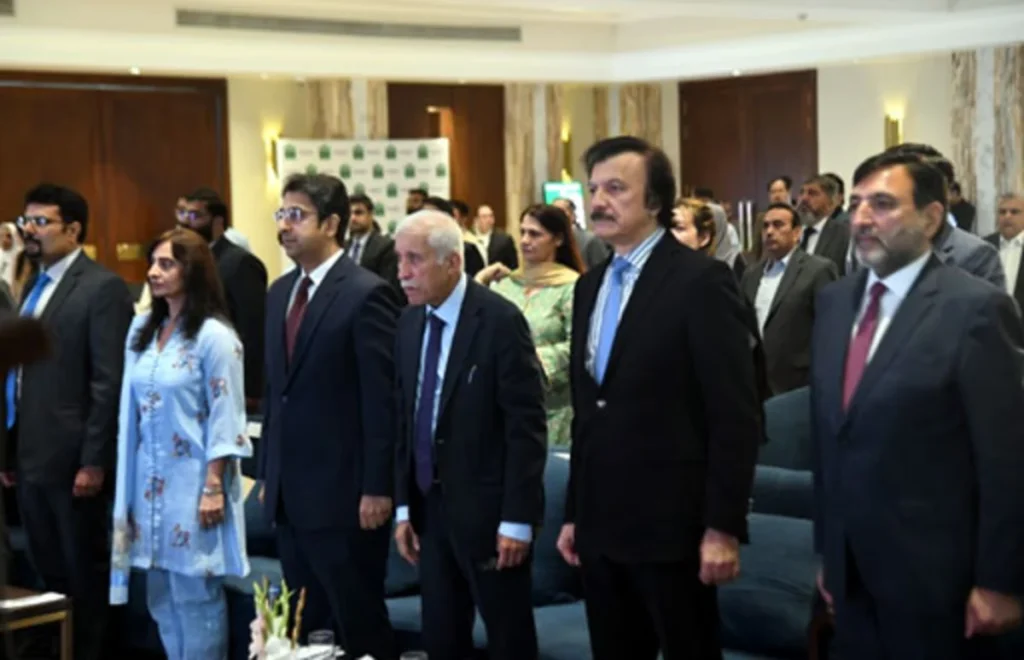
ISLAMABAD: Special Assistant to the Prime Minister, Mr. Haroon Akhtar Khan, addressed a high-level conference on regulatory reforms organized by the Board of Investment (BOI) at the Marriott Hotel, Islamabad. In his keynote speech, Mr. Khan highlighted the government’s commitment to transforming Pakistan into a development-oriented state through the implementation of a dynamic and action-driven National Industrial Policy (NIP).
Mr. Khan drew parallels with global models of economic transition and emphasized that a new era of change is underway in Pakistan, led by the Prime Minister’s Economic Initiatives for Transformation and Advancement of Pakistan (EITAP). “This is not just a regulatory reform moment — this is a national transformation movement,” he remarked.
Citing past economic challenges, Mr. Khan recalled that when the current government assumed office, inflation was at 38%, with interest rates peaking at 22%. “Today, we have successfully brought inflation down to 1.5%— a significant achievement,” he said. He acknowledged that key challenges persist, particularly high energy costs, tax burdens, and interest rates that have affected the competitiveness of both domestic industries and exporters.
Dercon, Akhtar Urge Urgent Industrial Reforms for Pakistan
In a forward-looking address, the SAPM stressed the need to eliminate super tax, rationalize corporate tax rates, and leverage reductions in fuel prices to lower power tariffs — key measures to support industrial and export growth. “We must remove cost disadvantages for our exporters. That is how we build a sustainable, resilient economy,” he stated.
The National Industrial Policy, spearheaded by the Ministry of Industries and Production with technical guidance from international experts including Professor Nicholas Lea, former Chief Economist at DFID UK, is positioned as a comprehensive strategy to achieve industrial revival, enhance productivity, foster innovation, and promote inclusive growth. Mr. Khan reiterated that the policy is rooted in real-world economic realities and not merely theoretical frameworks.