Experts Reveal Tips to Identify Donkey Meat
Authorities in Pakistan have uncovered a disturbing case of illegal meat trade near the capital. On July 27, the Islamabad Food Authority (IFA) raided a slaughterhouse in Tarnol, just three miles from Islamabad, and seized approximately 1,000 kilograms of donkey meat. Over 50 slaughtered donkeys were also recovered during the operation.
The incident has sparked nationwide concern over food safety and the illegal trade of donkey meat, which is banned for human consumption in Pakistan. Officials believe the meat may have been intended for both local consumption and possible export.
The IFA has launched a full investigation into the network behind the operation. Meanwhile, consumers are left questioning how to identify illegal meat before it reaches their plates.
Veterinary experts warn that donkey meat is often falsely sold as beef, posing religious, ethical, and health risks. For Pakistan’s Muslim-majority population, consuming donkey meat is forbidden under Islamic law. In addition, meat from uninspected, illegally slaughtered animals can carry dangerous diseases.
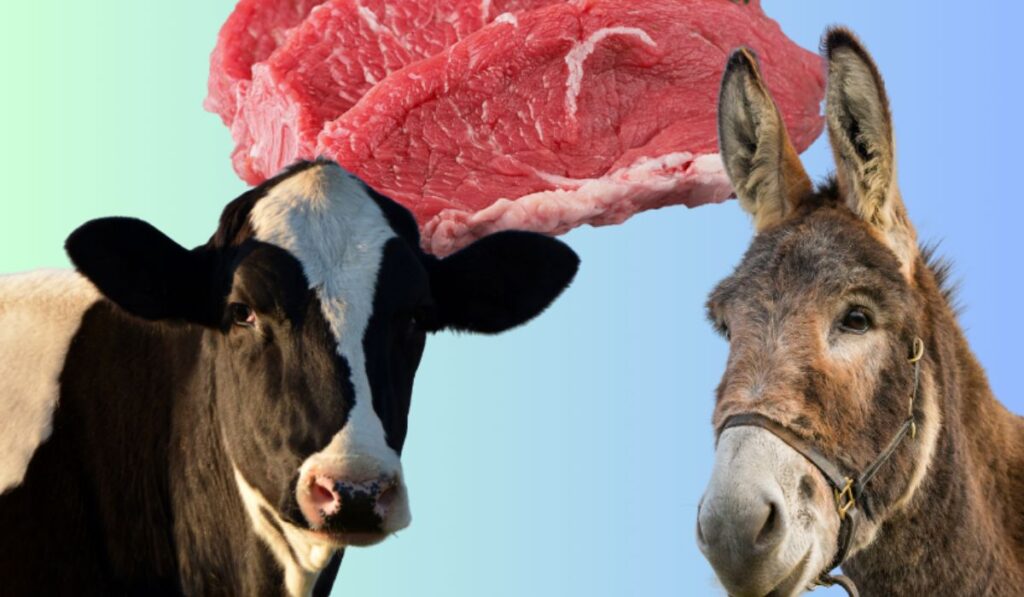
Veterinarian Dr Muhammad Ali explained that there are clear differences between donkey meat and halal beef. He noted that beef typically appears bright cherry red, while donkey meat is a much darker red with a bluish hue. Cooked donkey meat also gives off a stronger, unpleasant odor compared to beef.
Dr Ali added that the most accurate way to detect the source of meat is through laboratory testing. The ELISA test identifies species-specific proteins, while the PCR test confirms the animal’s DNA.
Consumers are advised to remain vigilant by purchasing meat only from licensed butchers and avoiding suspiciously low-priced meat dishes at small eateries. Experts are also calling for stricter enforcement and random meat checks by food authorities.