Ex-CCP chief rigged sugar case vote, claims Haroon
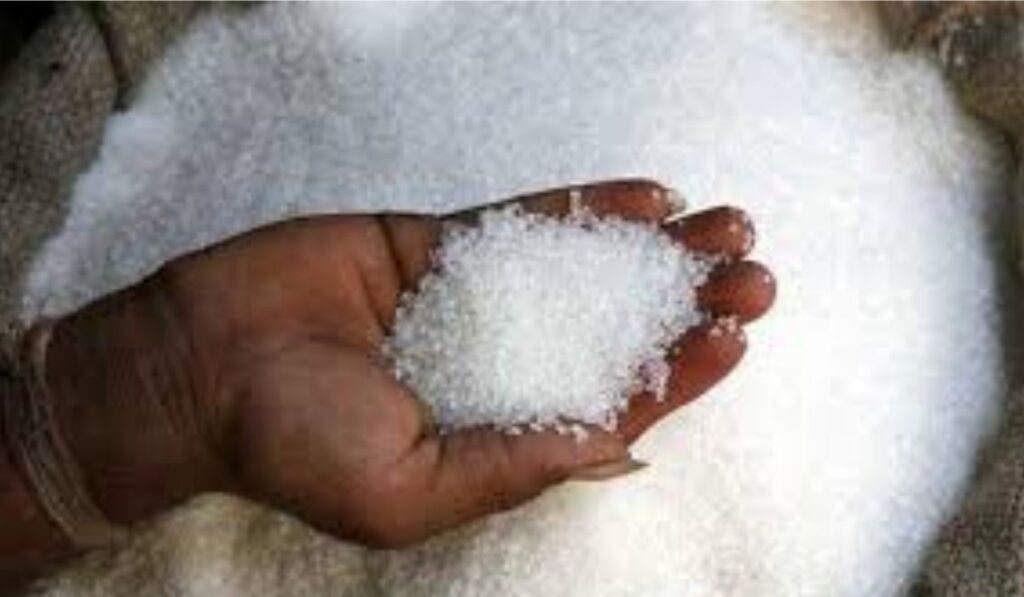
Special Assistant Haroon Akhtar Khan said the Rs40 billion fine on sugar mills by the Competition Commission of Pakistan was politically motivated and based on flawed voting.
Staff Report
Special Assistant to the Prime Minister on Industries and Production Haroon Akhtar Khan has accused the former chairman of the Competition Commission of Pakistan (CCP) of manipulating a ruling that imposed a Rs40 billion fine on sugar millers. Speaking to journalists in Islamabad after the Auto Parts Summit 2025, he alleged that the chairperson cast a double vote in a split decision, calling the penalty “100 percent wrong.”
Akhtar dismissed claims that sugar millers were behind the recent surge in sugar prices, attributing the increase to a 20% decline in sugarcane output. He maintained that the CCP’s findings on stock positions were “entirely flawed” and said the tribunal had already returned the order for review.
PKR 44bn Sugar Penalty: CAT Sends Case Back to CCP
Sugar price hike and deregulation demand
The special assistant argued that deregulation of sugar prices was the only solution, stressing that the government should focus on maintaining strategic reserves rather than controlling prices. He noted that sugar mills were selling at around Rs167 per kilogram while facing bank borrowing costs near 22%.
According to him, Pakistan had a two-year surplus of 1.5 million tons of sugar when exports were allowed, which earned about $450 million in foreign exchange. However, the subsequent 20% drop in sugarcane output cut production by 1.4 million tons, tightening supplies. He rejected the notion that exports had caused the current price spike.
Utility Stores and Steel Mills
Akhtar also addressed concerns about the Utility Stores Corporation, confirming that overdue salaries would soon be released and announcing a Voluntary Separation Scheme for permanent, temporary, and daily-wage staff.
On Pakistan Steel Mills, he said the government was pursuing a revival plan through a public–private partnership, with a feasibility study underway to determine the way forward.
Auto policy and industry reforms
Speaking earlier at the Auto Parts Summit 2025, Akhtar reaffirmed the government’s commitment to implementing the New Energy Vehicle (NEV) Policy 2025–30. He announced plans to introduce a vehicle certification law to ensure safety testing for both locally manufactured and imported used cars, with non-compliant imports to be returned.
Pakistan, a signatory to the 1958 UN Convention, has so far complied with 17 of 169 standards. Akhtar said compliance would be expanded to two- and three-wheelers, emphasizing that the government’s goal was to modernize the auto industry rather than restrict it.
Seven carmakers and more than 1,200 auto-parts manufacturers operate in Pakistan, contributing nearly 3% to GDP and supporting 2.5 million jobs. Akhtar highlighted government efforts to lower interest and energy costs while promoting export-led growth.
Industry criticism over policy shifts
At the summit, auto parts makers criticized inconsistent government policies, particularly the allowance of used car imports alongside an electric vehicle policy. Pakistan Association of Automotive Parts and Accessories Manufacturers (Paapam) chairman Usman Malik argued that such policies undermined local manufacturing and risked long-term damage.
Former chairman Aamir Allawala warned that the National Tariff Policy’s peak structure would erode domestic value addition, enabling assemblers to import parts at rates comparable to localized ones. He urged consultations for the next auto policy to safeguard local manufacturers through a cascading tariff framework.
While Akhtar pressed for deregulation in the sugar sector and modernization in the auto industry, stakeholders voiced concern over regulatory inconsistencies and policy reversals. The government’s upcoming industrial policy, expected to outline taxation, tariffs, and interest rates, is likely to play a pivotal role in shaping both industries.