Hub Power eyes new dividends, EV expansion and smelter talks
Hub Power Company (HUBC) expects maiden dividends from its Thar-based plants in 2025, while pushing into electric vehicles, a CKD facility, and energy infrastructure projects.
Hub Power Company (HUBC) has signaled a multi-pronged expansion strategy following its FY25 corporate briefing, highlighting imminent dividends from Thar-based plants, progress on its electric vehicle joint venture, and plans for new energy and industrial ventures. The update underlines HUBC’s diversification drive beyond conventional power generation as it navigates Pakistan’s evolving energy and industrial landscape.PSO, BYD, HUBCO Green Expand NEV Charging Network
The company announced that its two Thar-based coal projects, ThalNova and Thar Energy Limited (TEL), are set to declare maiden dividends in the second half of 2025. Unlike China Power Hub Generation Company (CPHGC), which pays dividends once a year, TEL and ThalNova are positioned to make payouts twice annually. CPHGC itself distributed a higher-than-expected dividend after June 30, 2025, supported by clearance of legacy receivables.
Outstanding receivables remain a structural concern, with CPHGC owed Rs.53 billion, TEL Rs.12 billion, and ThalNova Rs.11 billion. However, collection cycles have improved to one to two months from three to four months previously, raising expectations of healthier cash flows and stronger shareholder returns.
In a surprising diversification move, HUBC disclosed that it has already sold over 2,000 vehicles in under six months and secured more than 500 orders for its Shark model. The company is currently importing completely built units (CBUs) but has firmed up plans for a $150 million CKD (completely knocked down) assembly facility in Gharo. With a 25,000-unit production capacity, the project is expected to reach financial close in the last quarter of 2025, backed by a 60:40 debt-to-equity structure with support from both domestic and international lenders. Operations are targeted to begin within 24 months.
The vehicle venture is structured as a 50:50 joint venture between Hub Power Holding, a HUBC subsidiary, and Mega Conglomerate. While BYD has partnered as a technology and brand collaborator, the company clarified that BYD has not taken any equity stake—a notable departure from BYD’s global practice of retaining full ownership in markets such as Thailand and Brazil.
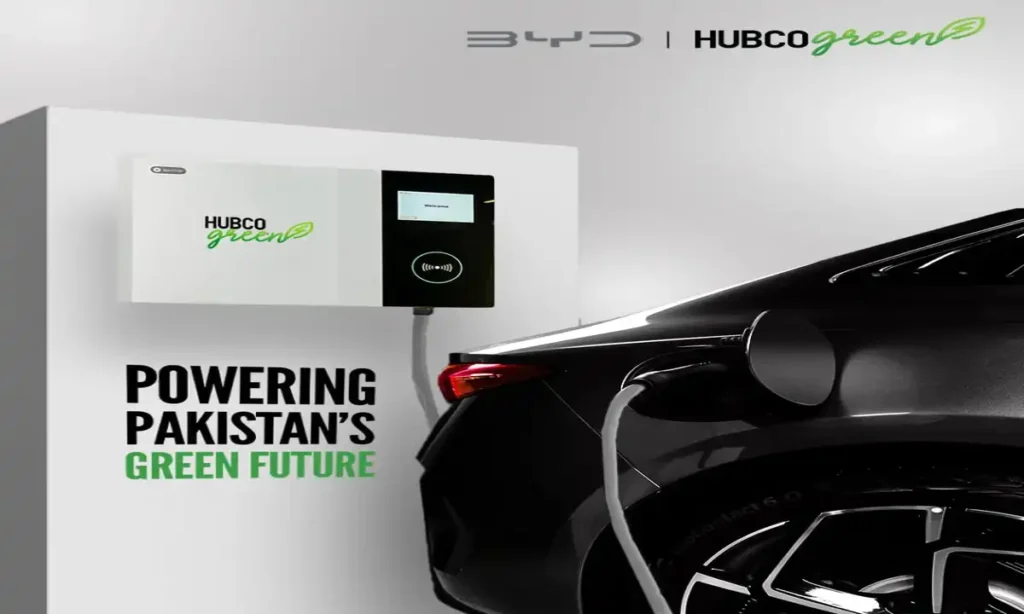
On EV infrastructure, HUBC aims to deploy fast-charging stations every 150–200 kilometers along the Karachi–Peshawar Motorway within the next six months. The company expects each site to break even with a utilization rate of three cars per day, noting that recent improvements from Chinese charging equipment suppliers have reduced costs compared to earlier European imports.
At the energy front, HUBC is assessing options for its Hub base site, including a proposed Single Point Mooring (SPM) on the Hub coast to import petroleum products for Pakistan State Oil (PSO). The plan would leverage existing storage capacity and integrate with PSO’s Asia Petroleum Pipeline, connecting Zulfiqarabad to the White Oil Pipeline system. This development could enhance Pakistan’s energy logistics while diversifying HUBC’s revenue streams.
The company also addressed its decision not to sell the Hub base plant earlier, noting that many plants were simultaneously on the market following the expiry of power purchase agreements (PPAs). Management indicated it is still seeking the right timing and buyer for the asset.
In parallel, HUBC has entered exploratory talks with Chinese partners on establishing an aluminum smelter in Pakistan. However, the company acknowledged that low domestic aluminum consumption and regulatory hurdles pose challenges to competitiveness. Similarly, while evaluating energy storage, HUBC noted that the lack of local lithium resources and strong competition from Chinese suppliers make large-scale battery ventures unviable at present.
The corporate briefing underscored HUBC’s effort to balance dividends from established assets with expansion into new industries. Analysts at Topline Securities reaffirmed a “Buy” rating on the stock, citing attractive valuations with FY26 and FY27 forward price-to-earnings ratios of 4.2 and 3.0, respectively, and dividend yields of 10% and 11%.
With the energy sector in flux and Pakistan pushing for industrial diversification, HUBC’s strategy represents both opportunity and risk. Its success will hinge on timely execution of the Gharo CKD facility, regulatory alignment for new ventures, and maintaining steady cash flows from power assets. For shareholders, the expected maiden dividends from Thar-based projects, coupled with the company’s entry into EVs and infrastructure, could mark a pivotal shift in HUBC’s growth trajectory.
Hub Power Company’s focus on dividend stability and strategic diversification—from coal power to cars, chargers, smelters, and energy logistics—illustrates its ambition to evolve into a broader energy and industrial player in Pakistan’s economy.Read More Stories on NewzToday