Pakistan risks FATF grey list return over unregulated digital deals
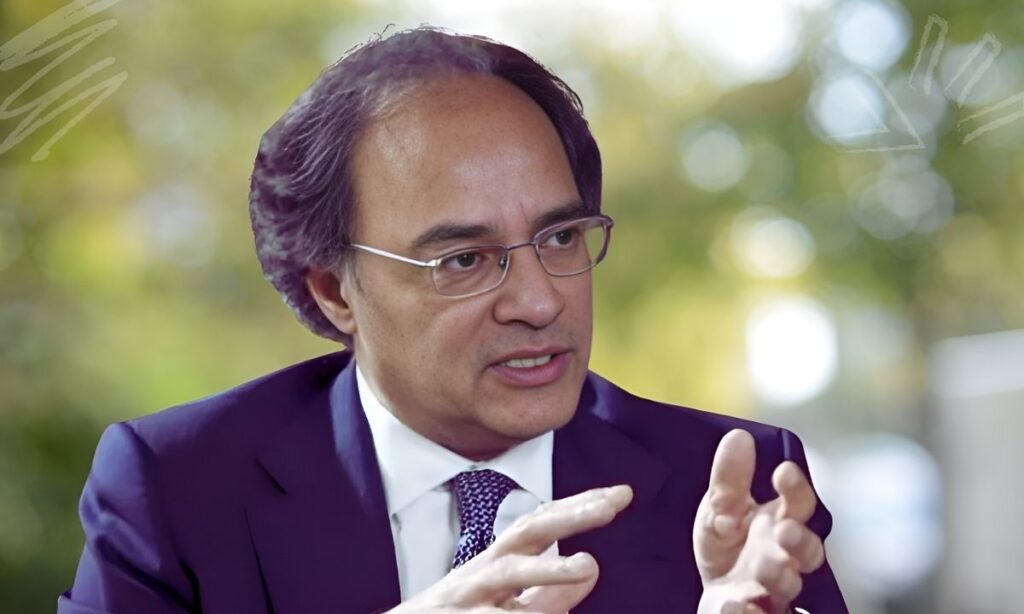
Finance Minister Muhammad Aurangzeb has warned that Pakistan risks returning to the Financial Action Task Force (FATF) grey list due to unregulated digital transactions involving around 15% of the population.
Speaking at the Leadership Summit on Blockchain and Digital Assets in Islamabad on Saturday, Aurangzeb said Pakistan cannot afford to let unregulated financial activity undermine its hard-won exit from the grey list. “If certain levels of activity are happening at this scale, it is only a question of when, not if, we are going to get into trouble again,” the finance minister cautioned. He noted that Pakistan had struggled for six years before securing its removal from the FATF list in 2022 and stressed that loopholes in digital transactions must not become the reason for renewed sanctions.Finance Minister Meets IFC Managing Director
His remarks came just two days ahead of the first meeting of the Pakistan Virtual Assets Regulatory Authority (PVARA), scheduled for Monday, where the government will review key policy measures to develop a transparent regulatory framework for digital assets.
Aurangzeb said more than 25 million Pakistanis—roughly 10 to 15% of the population, particularly the youth—are involved in digital businesses and transactions. While acknowledging the opportunities in blockchain, artificial intelligence (AI), cryptocurrency and Web 3.0, he underscored the need for regulation. “We have to accelerate our journey in terms of the new economy, and the ministry stands ready to assist,” he said.
Currently, digital currencies remain illegal in Pakistan. Proposed amendments that would provide legal cover for such assets are awaiting federal cabinet approval. Prime Minister Shehbaz Sharif has also set up a committee to review these amendments, including a controversial clause allowing dual nationals to serve as deputy governors of the State Bank of Pakistan.
The finance minister said Pakistan should not lag behind global advancements in emerging technologies, adding that the country has access to international collaboration models it can adapt rather than “starting from ground zero.” He emphasized that the government is examining both offensive and defensive elements of regulation, focusing on transparency and compliance to safeguard the economy.
Last month, the government promulgated the Virtual Assets Ordinance, which created PVARA as an autonomous federal regulator to license and oversee entities dealing in virtual assets. The authority’s mandate includes ensuring financial integrity, preventing illicit transactions and aligning Pakistan’s regime with FATF standards.
The ordinance, however, has only an eight-month lifespan—four months extendable by another four—after which Parliament must pass permanent legislation to institutionalize the regulator. Parliamentary standing committees are set to begin reviewing the ordinance next week.
Under the new rules, any company or individual intending to offer virtual asset services in Pakistan will be required to obtain a PVARA license. The licensing process will involve strict incorporation requirements, operational standards, compliance frameworks and reporting obligations. The framework also includes a regulatory sandbox to allow supervised testing of new business models and technologies in the digital asset space.
Aurangzeb framed the government’s approach as one of “responsible innovation,” noting that technologies such as blockchain, AI and Web 3.0 can deliver economic efficiency if properly integrated. “Technology is all about being faster, cheaper and better. If blockchain, AI, crypto and Web 3.0 can deliver that for Pakistan, that is what we are collectively shooting for,” he said.
Pakistan’s inclusion on the FATF grey list between 2018 and 2022 cost the economy billions in reduced foreign investment, banking restrictions and increased borrowing costs. The minister’s warning reflects concern that unchecked digital transactions could once again draw international scrutiny.
As the PVARA prepares to hold its first meeting, policymakers face the challenge of balancing innovation with compliance to global financial safeguards. The outcome of the upcoming legislative process will determine whether Pakistan can build a robust digital economy while avoiding the risk of renewed FATF monitoring.
Aurangzeb concluded by reiterating that Pakistan’s future competitiveness depends on embracing digital transformation responsibly. “We must not fall behind in the new economy,” he said, “but we must do so with safeguards that protect our sovereignty.”