Pakistan’s trade deficit widens 66% in July 2025
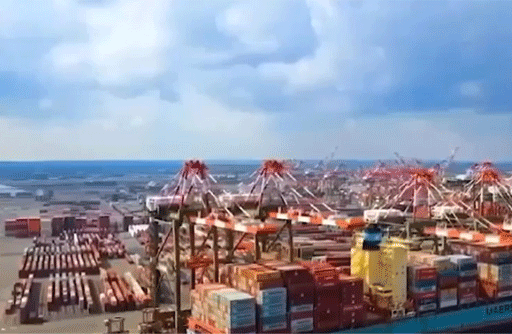
Pakistan’s trade deficit jumped to \$3.2 billion in July 2025, a 66% year-on-year increase, driven by a sharp rise in imports despite modest growth in exports, according to official data.
Figures released by the Pakistan Bureau of Statistics (PBS) show imports surged 39% year-on-year to \$5.8 billion during July, marking the highest monthly import bill recorded in calendar year 2025 since April. This outweighed a 16.4% increase in exports, pushing the trade gap sharply higher.
The main driver was a surge in non-energy imports, which climbed 53% year-on-year to their highest level in over two years. Much of this growth came from food imports, valued at \$743 million in July, up 45.7% compared with the same month last year. Analysts attribute the increase to reduced regulatory duties across multiple food categories, which boosted inflows.
Palm oil imports rose by nearly 26% year-on-year, hitting \$302 million despite lower global prices. The increase was attributed to higher volumes, with shipments rising to 286,000 metric tons in July compared with 175,000 MT in June and 256,000 MT in July 2024.
Pakistan, Azerbaijan push trade, investment roadmap
Energy imports also picked up, though less dramatically. Petroleum imports climbed 6.26% to \$1.35 billion in July, despite a fall in global oil prices to \$71 per barrel from \$87 a year earlier. The uptick reflected higher volumes, with Pakistan importing 2 million metric tons of petroleum products compared with 1.4 million MT in July 2024. Officials said geopolitical tensions in the Middle East prompted larger orders to build inventory buffers.
Transport sector imports posted the steepest rise, surging 176% year-on-year to \$307 million in July. This was the highest level in more than three years, driven by auto sector recovery, financing support for consumers, and State Bank policies promoting vehicle imports.
The widening trade gap underscores continued external sector pressures as Pakistan struggles to stabilize its balance of payments. A stronger import bill, particularly for food and transport, has outpaced gains in exports, raising concerns over the sustainability of recent improvements in foreign reserves.
Economists warn that the July data highlights structural challenges in Pakistan’s external accounts. The heavy reliance on imported food and energy leaves the economy vulnerable to commodity price swings, while the rebound in transport imports could strain foreign exchange reserves unless matched by export growth.
The deterioration also comes at a sensitive time, with Islamabad under pressure from international lenders to maintain fiscal discipline and avoid slippages in its current account. Policymakers may be forced to revisit regulatory duties or adopt other import-curbing measures if the upward trend continues in coming months.
Market watchers note that while rising imports may signal economic recovery in sectors like transport and industry, they pose risks to macroeconomic stability. The July deficit, the largest monthly gap since early 2025, will test the government’s ability to balance growth ambitions with external account sustainability.
With the trade deficit at \$3.2 billion in July and imports showing strong momentum, the coming months will be crucial in determining whether Pakistan can narrow the gap through higher exports or whether policymakers will resort to administrative measures to dampen import demand. The balance between growth and stability remains at the core of Pakistan’s external sector challenge.