US, Pakistan agree to expand energy ties in oil, gas, minerals
Washington signals shift toward economic engagement as US firms eye Pakistan’s energy market
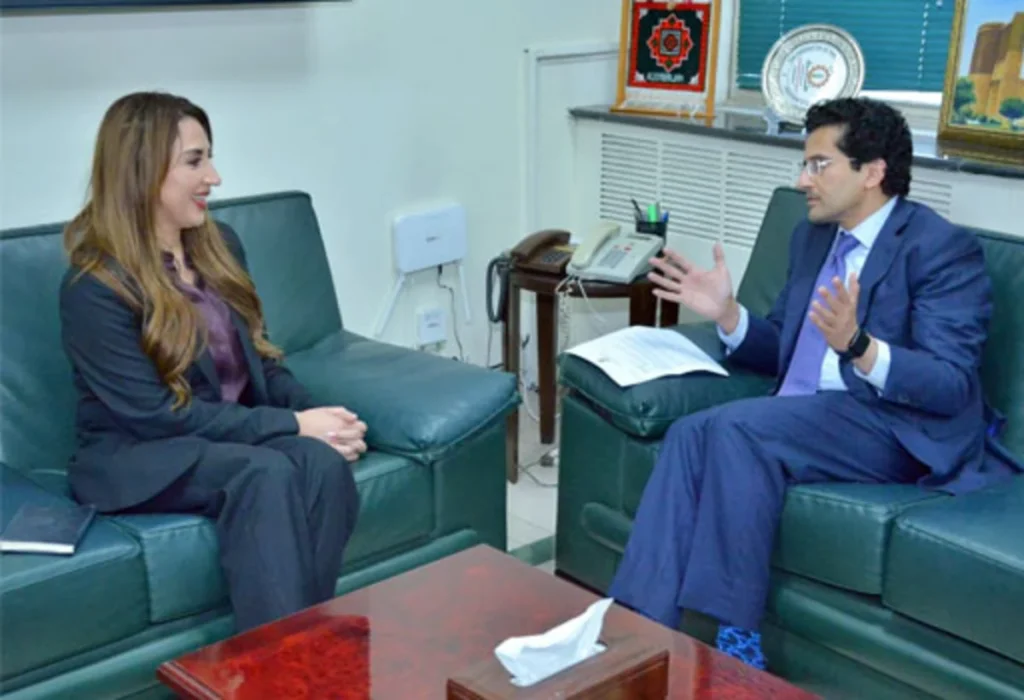
ISLAMABAD: Pakistan and the United States have pledged to deepen cooperation in the energy sector, with Federal Minister for Petroleum Ali Pervaiz Malik and US Charge d’Affaires Natalie A. Baker agreeing to expand collaboration in oil, gas, and minerals during talks held in Islamabad on August 20, 2025.
The meeting highlighted a new phase in bilateral relations, as both sides emphasized opportunities for American investment in Pakistan’s untapped reserves and exploration projects. Baker underlined that US companies see “significant potential” in Pakistan’s energy sector, noting growing interest in exploration, production, and mineral development. She added that the US Embassy would play a facilitating role in linking American investors with local counterparts.
Minister Malik welcomed the American interest, pointing out that Pakistan is preparing new bidding rounds for offshore and onshore oil and gas exploration blocks. He stressed that Pakistan’s substantial shale oil and gas reserves represent a strategic priority for energy security and economic growth. Malik confirmed that technical exchanges with US companies have already begun to pave the way for future projects.
Oil, gas firms contribute Rs 864bn in taxes
The discussions drew on the success of the recent “Direct Line” webinar, which connected American businesses with Pakistan’s mineral opportunities. Both sides agreed that similar platforms could be used to encourage broader investment in oil and gas, marking a shift toward economic engagement that extends beyond the traditional security lens of the relationship.
Baker emphasized this point directly, saying Washington was intent on broadening the partnership. “This is the moment to broaden the relationship beyond security, toward shared prosperity,” she said. Her comments signal a deliberate US effort to prioritize commercial and energy ties with Islamabad, in line with President Donald Trump’s stated vision for South Asia.
The meeting concluded with a commitment to harness US capital, technology, and expertise to support Pakistan’s domestic energy production capacity. Analysts note that such cooperation could diversify Pakistan’s energy mix, reduce dependence on costly imports, and create jobs, while providing American firms with access to a growing South Asian market.
This initiative builds on past US support for Pakistan’s energy infrastructure, which has included financing for grid modernization and technical assistance in renewables. However, the present focus on oil, gas, and minerals indicates a broader strategy aimed at unlocking Pakistan’s resource potential for long-term growth.
Pakistan’s heavy reliance on imported fuels has left its economy vulnerable to global price swings, with rising energy import bills contributing to persistent balance-of-payments pressures. By inviting US companies to invest in exploration and production, Islamabad hopes to reduce this dependency and meet the rising demand of its expanding population and industrial base.
For Washington, the partnership offers both commercial and strategic benefits. Energy cooperation with Pakistan could strengthen regional stability by enhancing self-sufficiency in a key partner state, while also giving American firms a foothold in South Asia’s resource-rich markets. The alignment also fits into the US strategy of expanding trade and investment ties across the region as a counterbalance to other global powers’ influence.
The timing is critical for Pakistan, where energy shortages continue to strain industry and households alike. With ongoing economic reforms and efforts to attract foreign capital, Islamabad sees US involvement as a way to accelerate exploration of shale and offshore reserves, turning untapped resources into reliable domestic supply.
The energy talks underscore a broader redefinition of US-Pakistan relations. Once dominated by counterterrorism and security concerns, the agenda is now being expanded to include economic cooperation and shared development goals. If American participation materializes, the resulting projects could reshape Pakistan’s energy landscape while strengthening bilateral ties with Washington.
The Islamabad discussions suggest a pragmatic convergence of interests. For Pakistan, US investment offers a pathway to greater energy independence and economic stability. For the United States, deepening engagement in oil, gas, and minerals reflects a strategic bet on Pakistan’s long-term growth and regional role. As both sides signal readiness to move forward, the outcome could mark a turning point in bilateral relations—anchored not only in security, but also in shared economic opportunity and energy cooperation.