River inflows surge as Tarbela, Mangla near capacity
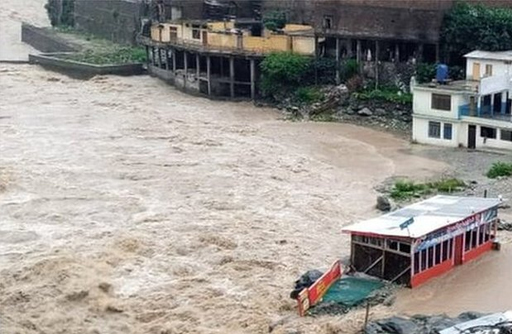
Indus inflows at Tarbela climb to 284,000 cusecs as Pakistan’s major reservoirs approach maximum conservation levels during peak monsoon season.
ISLAMABAD: Pakistan’s river inflows surged this week with Tarbela Dam on the Indus receiving 284,000 cusecs, while Mangla on the Jhelum and other major reservoirs edged closer to maximum conservation levels, raising both hopes for irrigation and concerns over flood management during the 2025 monsoon. According to the Water and Power Development Authority (WAPDA), Mangla Reservoir reached 1,216.55 feet against a maximum of 1,242 feet, holding 5.361 million acre-feet (MAF) of live storage, while Chashma stood at 639.50 feet, barely above its minimum operating level of 638.15 feet with 0.019 MAF live storage.
Daily inflow readings showed the Indus carrying heavy volumes downstream. At Nowshera, the Kabul River reported balanced inflows and outflows of 53,900 cusecs, while Khairabad Bridge registered 279,700 cusecs with steady discharges. The Jhelum at Mangla saw inflows of 46,000 cusecs, but restricted outflows of 7,400 cusecs, signaling deliberate storage buildup. On the Chenab, inflows at Marala were 67,500 cusecs compared to 49,000 cusecs outflows.
Heavy Rains Pakistan: Flooding Situation in Punjab
Further downstream, Taunsa Barrage recorded massive flows of 490,600 cusecs against 488,300 cusecs outflows, while Guddu Barrage in upper Sindh handled 396,300 cusecs of inflows and 375,500 cusecs outflows. Sukkur Barrage, historically central to Sindh’s irrigation network, reported inflows of 326,100 cusecs with outflows of 278,800 cusecs. At Kotri, the final barrage before the Arabian Sea, 115,800 cusecs entered with 108,600 cusecs released. Tributary barrages also showed strong activity, with Trimmu handling 82,000 cusecs inflows and Panjnad 58,500 cusecs.
WAPDA confirmed that Tarbela, Jinnah, Chashma, Nowshera, and Mangla readings were based on 24-hour mean flows, while other barrage data was taken at 6 a.m. Authorities stressed that close monitoring remains essential as river volumes rise through August, historically the most critical month for Pakistan’s river system. The 2010 super floods, triggered when inflows far exceeded safe discharge capacity, remain a cautionary benchmark.
Flood management has since become a coordinated responsibility of WAPDA and the National Disaster Management Authority (NDMA). In recent years, improved synchronization between water releases and downstream capacity has helped mitigate risks, but weak embankments in vulnerable riverine belts continue to pose threats. Experts note that even as controlled releases reduce the chance of overtopping, flash floods in rural belts remain a significant hazard, particularly in Sindh and southern Punjab.
For farmers, however, rising inflows have been welcomed. Adequate water availability at Sukkur and Kotri barrages is seen as a positive sign for Kharif crops such as cotton, rice, and sugarcane, which rely heavily on Indus irrigation during the monsoon. Analysts say that after years of fluctuating reservoir levels and prolonged dry spells, the current buildup provides a much-needed cushion for agriculture and hydropower generation.
Still, experts caution that Pakistan’s dual challenge of water scarcity and flood risk underscores the need for careful reservoir operation. With Tarbela and Mangla nearing capacity, controlled discharges in the coming weeks will determine whether the system balances irrigation needs with flood prevention. Past experiences show that delays or miscalculations in water releases have compounded disasters, highlighting the importance of timely data-driven management.
As Pakistan navigates the peak of the 2025 monsoon, the ability to maintain controlled flows through barrages such as Guddu, Sukkur, and Kotri will be critical. Authorities are issuing daily updates to prepare downstream communities, while hydrologists emphasize that maintaining buffer capacity in reservoirs could prove decisive in preventing flood emergencies.
The rising inflows mark both opportunity and risk—promising relief for farmers and power producers but demanding vigilance from river managers. With Tarbela, Mangla, and other key dams under pressure, Pakistan faces a delicate balancing act between maximizing water storage and safeguarding millions living along the Indus floodplains.