Pakistan, Afghanistan Ink PTA to Slash Tariffs
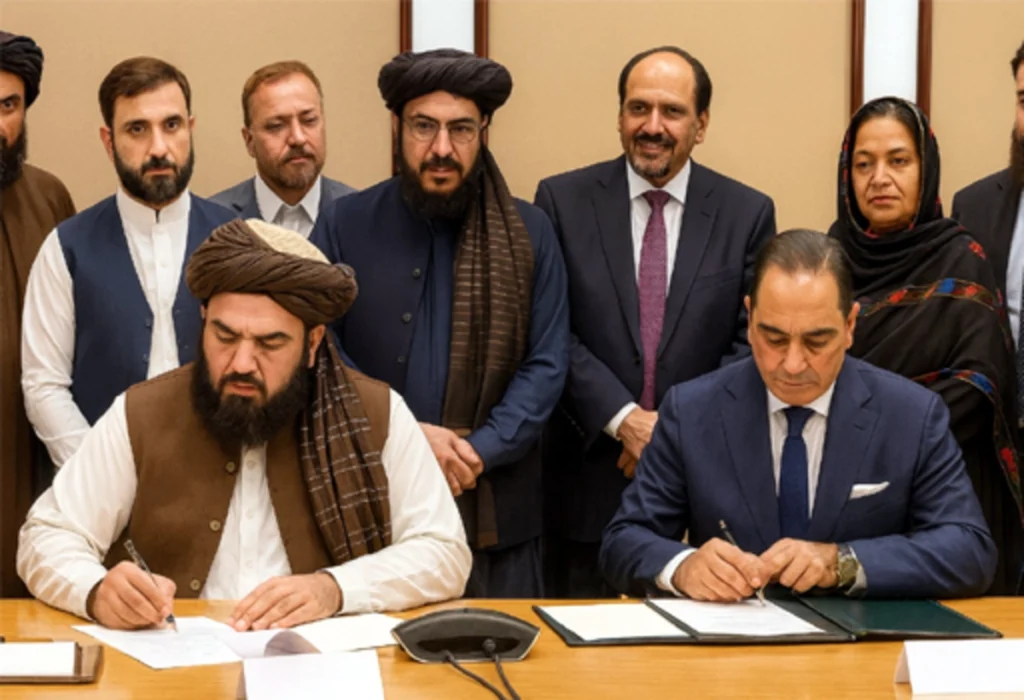
Pakistan and Afghanistan have signed a one-year preferential trade agreement set to reduce tariffs on eight key fruits and vegetables by up to 60%, marking a milestone in economic cooperation amid improving diplomatic ties.
Staff Report
Pakistan and Taliban-led Afghanistan signed a Preferential Trade Agreement (PTA) in Islamabad on July 23, 2025, cutting import duties on four key agricultural products each. Tariffs, previously over 60%, will be capped at 22–27% from August 1, 2025, until July 31, 2026, and may be renewed or expanded after review arabnews.com told.
The deal—signed by Afghan Deputy Minister Mullah Ahmadullah Zahid and Pakistan Commerce Secretary Javed Paul—runs in parallel with a new Early Harvest Program and forms part of wider efforts to revive trade and ease tensions between the two neighboursaa.com.tr revealed.
Tariff Concessions: What’s In and Out
Afghan exports to Pakistan: grapes (230,000 t), apples (100,000 t), pomegranates (100,000 t), tomatoes (400,000 t) — duties cut to 22–27%.
Pakistani exports to Afghanistan: potatoes (400,000 t), mangoes, kinnows, bananas (100,000–230,000 t) — duties lowered to 22–27% aa.com.tr reported.
These concessions are accompanied by a bilateral Implementation Committee, representing customs and agriculture ministries, to monitor the arrangement on a monthly basis.
Context: A Diplomatic Reset
This economic opening follows May’s breakthrough in Beijing, where China mediated the restoration of ambassador-level ties and extended the China‑Pakistan Economic Corridor (CPEC) into Afghanistan, according to washingtonpost.com.
Analysts note China’s interest in regional stability, especially as it secures infrastructure investment linked to CPEC.
The new trade deal aligns with broader initiatives like the Khyber Pass Economic Corridor and the proposed Uzbekistan–Afghanistan–Pakistan railway, aimed at enhancing regional integration
Why Now: A Strategic Window
Economic pressure: Afghanistan urgently needs trade routes and markets following a cut in Western aid; Pakistan seeks economic reactivation along its western border.
Security calculus: Islamabad has long accused Kabul of harbouring Pakistani Taliban (TTP) militants. The PTA arrival signals a thaw in relations, as part of broader diplomatic reconciliation washingtonpost.com reported.
It further said that former Pakistani senator Mushahid Hussain commented, “The deal helps ease pressure on Pakistan’s western frontier,” reinforcing both trade and security logic.
Sector Impact: Growth & Challenges
Agricultural boost: Lower tariffs are expected to benefit farmers—particularly fruit growers in Afghanistan and mango exporters in Pakistan—by expanding market access and boosting incomes.
Logistics test: With APTTA still seen as underutilised and plagued by procedural bottlenecks, the new scheme tests customs enforcement and cross-border logistics—including origin certificates issued by relevant ministries, according to arabnews.com.
The South Asian Free Trade Area (SAFTA) aimed to reduce tariffs regionally by zero by 2012. However, both countries have maintained “sensitive lists” that retained high duties, highlighting longstanding protectionist barriers.
Skepticism & Oversight
Traders note potential delays in customs clearance, echoing past complaints under APTTA. Pakistani exporters in Afghanistan have frequently raised concerns about bureaucratic hurdles on both sides.
Additionally, there is speculation that political motives may underlie the timing—coming ahead of economic reviews by the IMF and amid pressure to revive exports under stalled bailout programmes.
Public & Expert Reaction
Geo-political analysts argue that China’s involvement in brokering this trade thaw underscores its expanding regional influence and aims to secure CPEC-linked projects.
“Traders have few illusions—agreements on paper are promising, but implementation is what matters. Certificates of Origin and customs harmonisation will be the real test.”
Meanwhile, Dawn highlighted ongoing negotiations on a revised transit trade agreement as part of efforts to simplify bilateral trade, dawn.com reported.
What to Watch
Early Harvest Program rollout: Will reductions lead to volume increases and price stabilization?
APTTA reform progress: Will Pakistan and Afghanistan revise the 2010 transit deal to include smoother customs and multimodal frameworks?
CPEC integration: Could this mark a step toward a wider Free Trade Area across the EU, China, Pakistan, Afghanistan, and Central Asia?